Elf (2003) vs Clifford (1994)
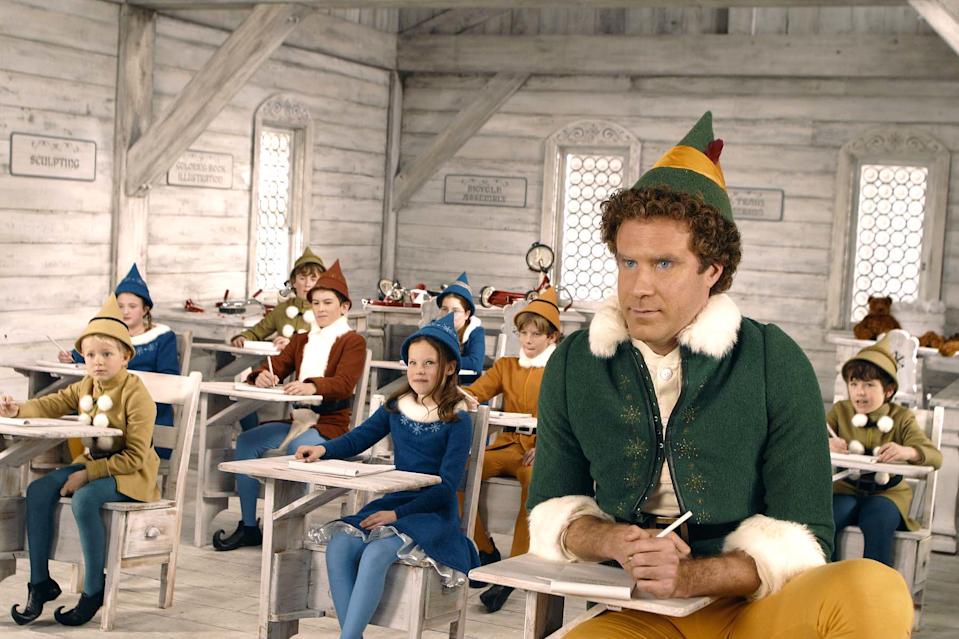
I recently watched Elf (2003) for the first time. I think what shocked me most is that the movie is a 1:1 analogue to 1994’s Clifford, with Will Ferrell in the Martin Short role, James Caan in the Charles Grodin role, and Mary Steenburgen very conspicuously reprising her role as MILF.
The salient difference between the two movies is that Elf is about a naïve, good-hearted himbo—a ‘lost boy’ trapped in the body of a hulking adult—whereas Clifford is the inverse, a ‘bad seed’, a 10-year-old boy seemingly possessed of the calculating cunning of a grown man. As such, Clifford is very much a horror movie: only Charles Grodin can see that the “child” is an ancient Panlike evil.
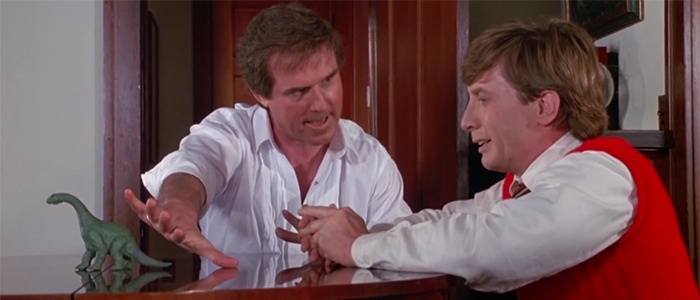
“Something people tend to forget, because he’s older and cuter now,” I suggested to a member of Gen Z, “is that there is something distinctly mean-spirited about Martin Short’s sense of humor.” This isn’t to imply that Martin Short has any personal traits in common with the characters he plays, but he does play the dark tetrad for laughs.
Roger Ebert, a famous hater of Clifford, wrote,
Many of the jokes are of a cruel physical nature, involving a hairpiece worn by the uncle’s boss, or face-lifts, or phony bomb threats. What they boil down to is, little Clifford is mean, vindictive, spiteful and cruel. So hateful that if a real little boy had played him, the movie would be like “The Omen” filtered through “The Good Son” and a particularly bad evening of “Saturday Night Live.” [...] If Clifford is not a real little boy, then what is he? The movie doesn’t know and neither does the audience, and for much of the running time we sit there staring stupefied at the screen, trying to figure out what the hell we’re supposed to be thinking.
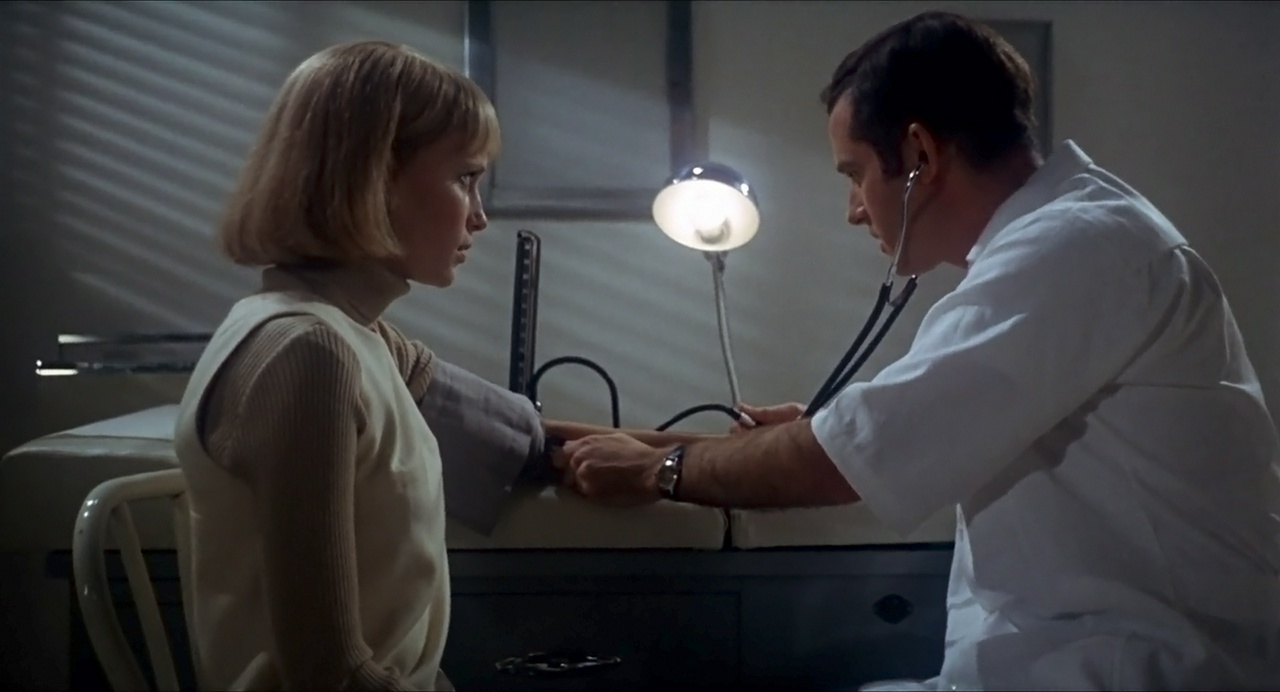
In Rosemary’s Baby, Charles Grodin plays the handsome, compassionate physician—Dr. Hill, Rosemary’s only ally—whom, at the movie’s emotional climax, Mia Farrow visits, pleading for his help. The doctor betrays her instead. In Clifford, when you’re watching Charles Grodin’s character being gaslit by everyone around him, it’s easy to remember Rosemary’s Baby and his role in it. Maybe that subtext—Grodin’s role in a 1968 Polansky film—is supposed to make his complete ruination at the hands of a wicked child-man more ironic and satisfying.
During our screening of Elf I encouraged the Gen Z cusper to watch Misery sometime, because she likes gruesome horror-comedy, but also because James Caan wears an identical off-kilter smirk of “I’d like to throttle you, but my hands are tied.” I also encouraged her to watch Clifford “in clips, on YouTube,” adding that it really isn’t necessary to watch the entire thing.
Then I mused aloud that Clifford is the Jungian shadow of Buddy the Elf. Then I speculated that if you gallivant through the world thinking of yourself as a sort of Buddy the Elf—and performing innocence as proof to others—it would automatically make you a real-life Clifford instead. This realization immediately darkened my perception of Elf in general.
Maybe Clifford feels like the more honest character of the two: it’s debatable whether he cares about ‘fitting in’ and, if he is trying to win Charles Grodin’s love, it’s through a targeted campaign of terrorism.
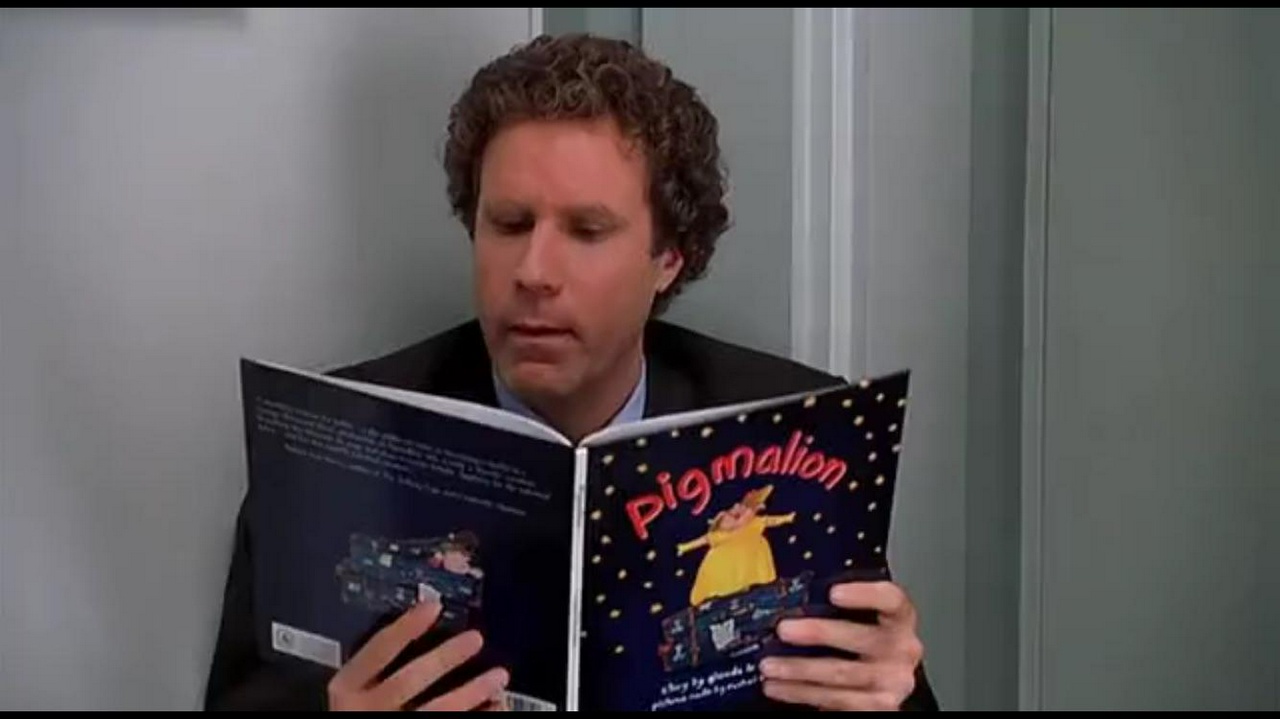
image via Reddit
How dark is Elf, really? In one scene, Buddy is reading a children’s picture book; a flash of the book’s cover shows us its title, ‘Pigmalion’. Surprised, I wondered aloud what the connective tissue is between Elf and the Greek myth about a man falling in love with one of his own sculptures (which is the plot of Weird Science, Mannequin, and other comedies). The Gen Z’er pulled out her phone and presently informed me that George Bernard Shaw’s Pygmalion and its characters are the basis for My Fair Lady. If I ever knew this, I’d forgotten.
“So Buddy the Elf is supposed to be Eliza Doolittle?” I asked, bewildered. I never would’ve thought of Elf as a makeover movie, but I guess it is.
But made over for whom? Buddy’s stepmom and half-brother accept him right away, his romantic interest Jovie is two-dimensional and has scary-low standards, and his adoptive pop Bob Newhart seems to love Buddy unconditionally. If nothing else, Buddy’s makeover is primarily in service of winning the affection of his cold, detached, work-obsessed father—a toxic patriarch who only needs to learn how to give and receive hugs—whose validation, his permission, Buddy inexplicably needs in order to pass through the threshold to become a full-grown adult. This is a nightmare.
But the movie has its happy ending after all: Buddy learns how to fit in without totally losing his magic/soul, by commodifying his quirks and proving his utility to Santa, his father, and all of New York City I guess.
As Elf veered toward the finish line, I turned to the Gen Z’er and said, “It has too many characters in it. Which is why it’s a perfect prequel to the Marvel franchise.” That made her laugh.