interloper
I was talking with someone about a regional celebrity in her area, a freelance meteorologist who diligently serves the Denver metro area and the surrounding American West.
He does really good work, I said. Does he have a small team? I asked, because it seemed a profound amount of daily labor. Yes, he does, she told me.
I was thoughtful. "This guy is a good community servant," I said. "In some ways the A.I. takeover is threatening this, but in other ways, A.I. emphasizes the value of his service. His work is indispensable to his collective."
"He is beloved and has a following, lol," my friend replied.
I told her, then, about a very sad article I'd read, about a prolific freelance writer who'd been 'making a name' for herself, whose sources and quotes appeared to've been A.I.-generated—that is to say, fabricated. Another, Toronto-based journalist had investigated the freelance writer and her scams.
The freelancer in question was a real person, likely based in Nigeria. But her articles suggested that she lived in North America, that she traveled often, embedding herself in other cultures, which she'd go on to describe with real affection. I texted my friend a quote from the exposé, about the cultural diaspora in London, a subject the freelancer had covered:
My favourite "Victoria Goldiee" story is a piece she published in The Guardian just last month. It's a first-person essay without quotes, and thus difficult to fact-check. In it, Goldiee—who told me she lives in Toronto, writes as an American in other work, enthuses about the daily jollof specials at a restaurant in Ghana in yet other writing, and lists herself as based in Nigeria elsewhere—vividly describes discovering underground music as she moves through life in 21st-century England. It follows her from a Somali football league in east London to "Morley's fried chicken shops lit up after midnight" and "community centres that smell of carpet cleaner and curry." It's a rousing argument that real culture happens in real spaces, between real human beings, not in some cold, computer-generated reality. "The future of our music," it reads, "is not written by algorithm."
"Wonderful article," reads one of many approving comments.
"Beautiful message that a lot of people aren't trudging wide-eyed and brain-dead through this increasingly soulless, corporate-heavy… modern world," reads another. "They are socialising, communicating, loving and laughing and making culture like real, thinking, feeling human beings."
"It made me sad," I explained, "because I remembered living 'on' the Internet as a teen in a small town, and I thought about this young woman in Nigeria, pretending to be a member of the communities she is writing about."
"Yes," my friend answered, "I bet she is trapped there and just barely getting by, and sees writing and the internet as her escape, maybe her only way to pay the bills, too."
Yes, exactly.
Later, as I tidied in the kitchen, I thought about my adoptive parents' deaths. "I thought you'd have a family by now," my adoptive mother had told me shortly before her passing.
Immediately afterward, I was in my childhood home alone, for months on end, and I'd been having nightmares about all my exes. What I should have done in that moment, freed from caregiving, was pick myself up off the floor and send myself to grad school. But I still didn't know myself well enough to choose a major, and I also felt too old to go (I was 30).
Wow, I got married in lieu of sending myself to grad school, I thought to myself. I'd outsourced my own sense of purpose, right when I could've swiped my own Masters degree instead. A serial monogamist, I thought to myself bitterly, was there ever anything more heteronormative or more piteous?
Psychology talks about abandonment wounds; pagans and New Agers might describe a generational "witch wound." But Christian deliverance ministry, such as it is, uses a much more lurid description: the "Orphan Spirit," a type of heritable spiritual affliction, a parasite that attacks its host.
"Let yourself be adopted by God," a Christian counselor might advise.
That advice is well and good, but I think it's "adopted"—the word itself, the concept, the attendant baggage—that generates the gap, the distance, the disconnection. Adopted: to acquire, to have and to use, to take on as if one's own. There's a reason people use phrases like chosen family, and it's because "adopted" is a stupid word, one that describes a rigorous legal process that doesn't already have another, better word.
My grief might've been drafted into my natal chart. It's right there in my planetary placements: Cancer Rising. To be tasked with the search for the safety and security of 'home' and 'family' necessitates that you lack 'home' and 'family' to begin with. (Even the perfectly normal question "where are you from" glitches me out, stalls me in a processing loop.) Unfortunately, my Venus is also in Cancer; it is tragic on its face.
I contain two truths at once: We are probably ruled by our natal charts and, also, I don't fucking like it. I'm not doing it; I don't have to "go with the flow."
I once tried to fight the ocean with a stick. (It was a big stick.) I got real mad, and I smacked a wave with it. I was 9. I understand that the ocean and I are both made of water. I understand that the same moon jerks the ocean and me to and fro, matching tides. I don't have to like the moon. Maybe I think we should point rockets at the other planets and try to take them out one by one. Maybe that's what I think.
I'm adopted, but not like other people are adopted. I knew my parents; my guardians were my relatives. But I also remember recognizing, during a "family tree" elementary school assignment, that my family didn't look like other families (and I raised hell about the verbiage and insensitivity of the school assignment, because I was a very feisty 9-year old). Still, no, I didn't particularly feel like "adoptee" narratives applied to me.
Other people did, though. Kids especially, kids who repeat what their parents talk about.
I thought back to my exes, and serial monogamy suddenly clicked. I was scoping out other families, of course—a mission to find a baseline for "normal." I was talking to my peers' moms, dads, siblings. I've seen into a lot of different families over the years, their cultures, their rules of engagement, what they think is classy or tacky, what they eat for dinner, whether they go to church on Sundays or just on holidays or not even once. Some families are very healthy, actually! My high school boyfriend's mom taught me loom-weaving. Derek's mom avoided me at first because she thought I wouldn't like that she was a professional astrologer. She was probably right, I probably didn't. Now I just wish I'd asked her more questions.
I'm thinking about this because of the many Christmases I've spent with other families. (I didn't date my way into those, just for the record.)
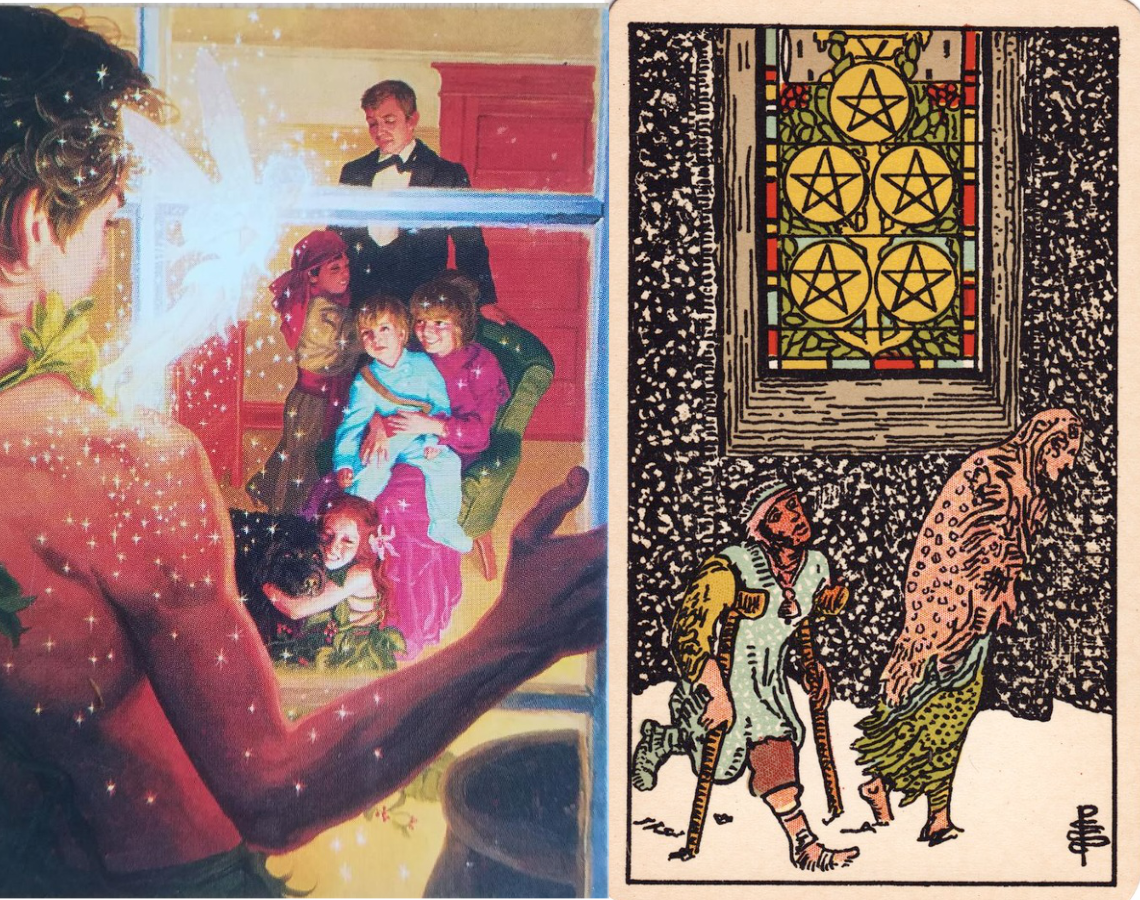
A Dickens Christmas moppet, that's what. I really don't know how I keep Home Aloneing this time of year. Sometimes I worry I saw that movie in 1990 and thought "well, a week of peace and quiet doesn't sound so bad" and thus brought the curse onto myself. Time enough at last.
Orphan is a dumb word, too. There's reams of damaging Victorian literature about little orphan girls. Orphan boys grow up to be Luke Skywalker or Harry Potter; orphan girls chip away at big egos until they successfully make their aunt and uncle smile for the first time. Are these really the only two viable career paths?
Also, the word "orphan" attracts the kinds of people who fetishize orphans, who chase after stray cats. Excuse you! Even stray cats have standards. "Aww, she's scared!" Yes, that's right—of you.
When the 2009 horror movie Orphan came out, it generated a lot of controversy. Wikipedia:
The film's content, depicting a murderous adoptee, was not well received by some adoption groups. The controversy caused filmmakers to change a line in one of their trailers from: "It must be difficult to love an adopted child as much as your own" to "I don't think Mommy likes me very much". Melissa Fay Greene of The Daily Beast commented: "The movie Orphan comes directly from this unexamined place in popular culture. Esther's shadowy past includes Eastern Europe; she appears normal and sweet but quickly turns violent and cruel, especially toward her mother. These are clichés. This is the baggage with which we saddle abandoned, orphaned, or disabled children given a fresh start at family life."
Although I'd certainly resented being treated as some sort of interloper by people who were outside of our close-knit family unit, the movie itself did not bother me. Yeah! Go get yours, girl! Surely it holds, for me, the same fascination as Sredni Vashtar.
I guess I didn't relate to the main character of Orphan at all, mainly because I've never tried to burn a house down. But as I've gotten older, I've noticed other people feeling like I am trying to burn a house down, which is very confusing. It feels like other people are trying to manifest a narrative onto me, wishing it upon me, trying to make it come true. It feels like a mystical version of Minority Report. Why is everyone so certain? Should I be getting worried?
And maybe it's working? I've started to feel more and more like a 'real' orphan—a feeling that is substantiated by the reality that most of my family is by now deceased. You would think that being around other families would help to feel less alone, but most of the time it doesn't. I live near or around a family that I consider my own—but that doesn't mean I've ever shown up in family photos. I did marry into a family, but I was more of a seat-warmer.
As my sisterly friend was hanging stockings along the mantel I interrupted her, asked her to move mine to the outside edge, or else her SIL would notice her stocking was the outsider and, also, would wonder what my stocking was doing there in between hers and her husband's.
"Oh, my gosh, I never would've noticed!" my sisterly friend exclaimed, rearranging the stockings in a scramble.
"Of course not," I said neutrally, "but she would." I would.
"Mommy, I want my stocking next to yours," the youngest child said.
"Since we're doing seating arrangements...!" I joked.
A few months ago, a close friend brought up a terrible subject for me: the time I ruined her LTR. Now she was going to tell me something, and she already knew it was going to make me feel worse, but she intended for it to make me feel better. She at least hoped I'd consider it, ruminate on it.
I had urged her, after witnessing some abhorrent behavior, to leave her abusive relationship. And she'd already intuited I felt awful about this: that I felt I'd overstepped, that I was horrified with myself, that I hadn't realized the ways in which her life would be altered by leaving, that I'd hidden myself away in shame afterward.
But my insistence had not caused the breakup at all, she told me. Rather, separately, it was the girlfriend's ultimatum: "It's her or me." The friendship, or the relationship.
Don't you understand, Jenn? I chose my friendship with you.
I don't know what had possessed my friend to tell me this. At home, on my iPad in bed, I screamed. This is my deepest wound—the fact that, throughout adulthood, I've respectfully, dutifully, eventually abandoned almost every real-life opposite-gender friendship, because of appearances, fucking appearances. And yet one friend had elected to keep me, and I'd disappeared on her, too. I know better than to go where I'm not wanted, but good Christ, I don't have enough directional sense to stay where I'm wanted, either.
There is one type of orphan I like, and that's an orphan drug. That's when a medication is initially designed or marketed to do one thing, but it turns out the medication is more useful or effective at doing another, completely different thing.
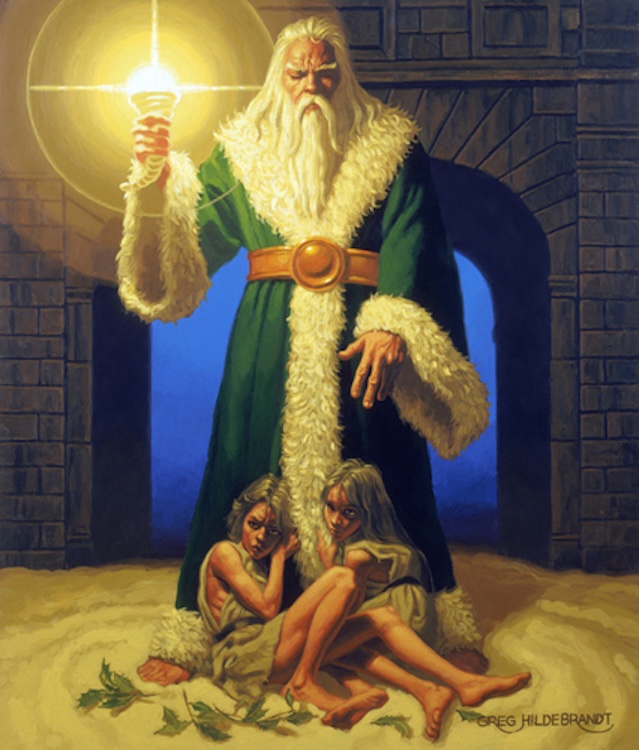
ignorance and want
I'm still thinking about this. I have already done the exercise, countless times, where you hold the unloved inner child in your arms and assure her she's safe, she's lovable, you're here now, you're trustworthy, you will protect her, but the orphan spirit keeps asking me to look at her again—still attention-starved, so loud and so bored, so scraggly and un-cute. And so perpetually unable to get away with any cute kid stuff.
So I am begging her to tell me, what else? What else? How do I leverage you?
(The answer, of course, is to devise a scenario where the curse of clear-sightedness is only applied to those who want it—only looking at what is asking to be seen, and trying my best to block out the rest—and speaking only when explicitly prompted.)
12/19 update - LMAO this is exactly why I keep this outrageous astrology app installed.