Widow’s Bay s1e4: “Beach Reads”
basically spoiler-free!
My friend Caro and I were discussing Apple TV+’s Widow’s Bay, which I super enjoy because the real horror—and the coziness, the easy comedy of it all—is grounded in recognizable human reactions and interactions, in the exasperating awfulness of having more information than you had a day earlier. The supernatural antics are just mood, MacGuffin, psychological shorthand, seasoning.
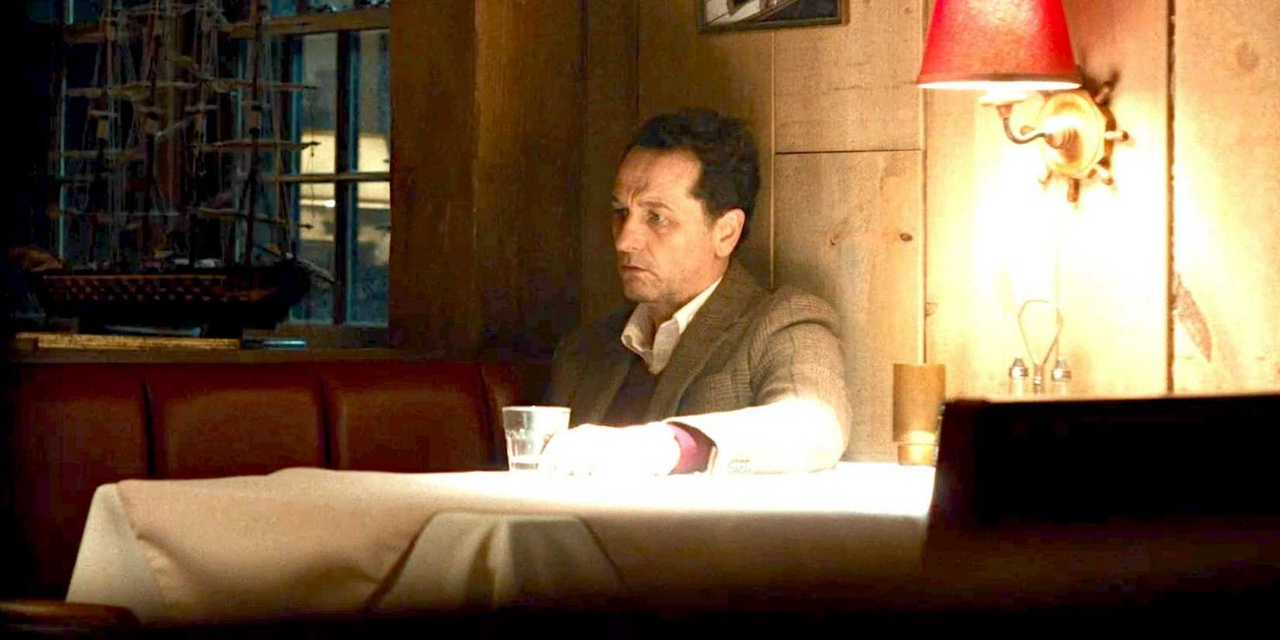
The show centers its lens on the tension awakening in its main character, Mayor Tom Loftis: the massive gap between what he rationally, cognitively believes and, deep underneath, what he really believes, a memory he barely holds at bay, a secret he resolutely keeps from his coworkers, his son, and especially from himself.
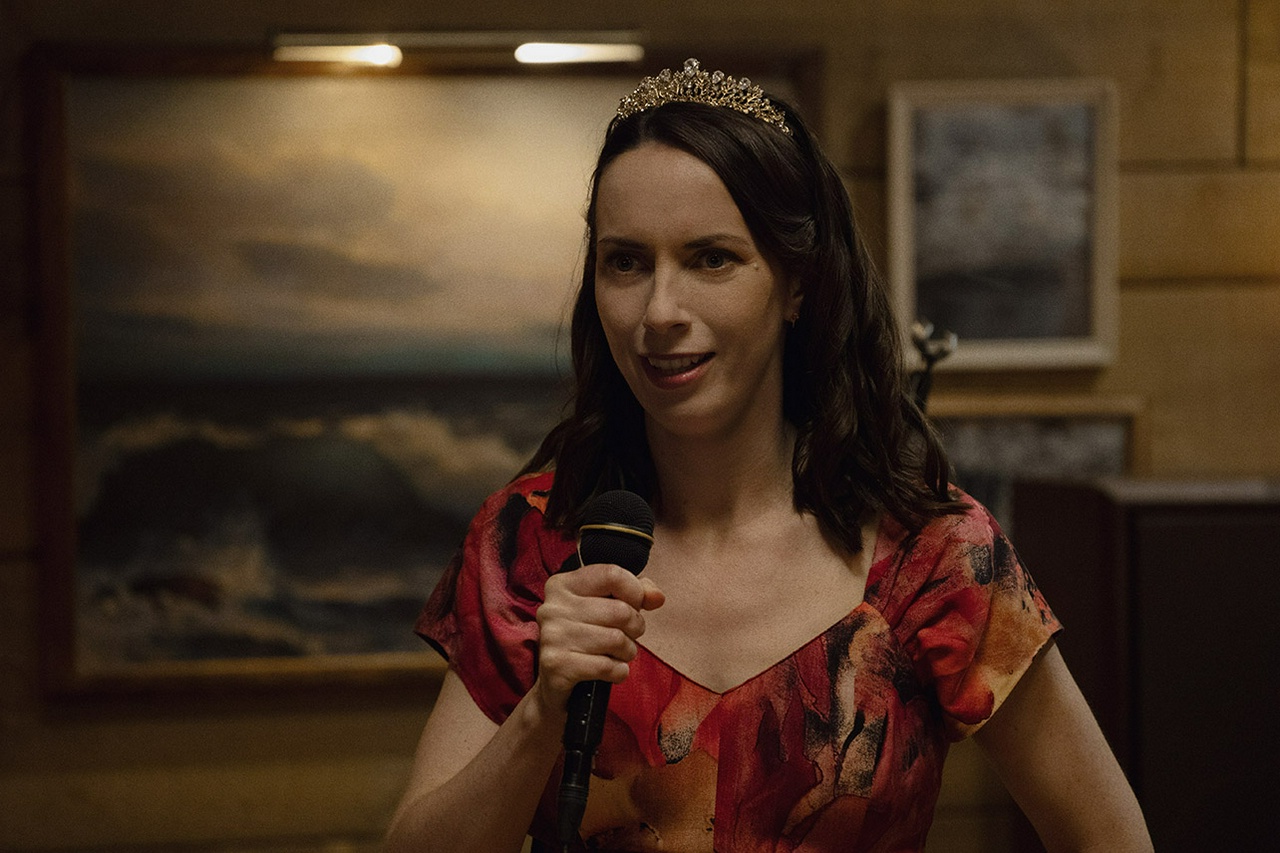
Caro and I were specifically dissecting episode 4, “Beach Reads,” and its complicated messaging about a survivor’s personal account of her own life-threatening experience. Because her account of events has been unanimously shrugged off and dismissed by the townspeople as mere attention-seeking, the character Patricia cannot stop trying to convince others of what she previously witnessed and experienced. This sustained collective denial of her experience has, over time, inevitably eroded Patricia’s own ability to accurately reality-check; she can no longer trust her own perceptions or intuition.
As cringey, depressing, and demoralizing as this episode’s setup is, it also pays big dividends. I was laugh-wheeze-crying, praising it to my friends as the funniest episode of the series. But it was also so horrific and so human, so pathological, for Patricia to pivot immediately to “Why did you let me…?” Of course we pivot to the person standing closest to us and scream that they let us do anything, which—along with Patricia repeatedly reloading a webpage, sick with desperation, the one real chill of the episode—is one of very few moments of actual true horror.
Maybe surprising my friend Caro, I held a certain amount of compassion for a pretty nasty character, whom I was just calling “Ponytail.” Adult Woman with a Ponytail has had it with Patricia. In a damning monologue, Grown-ass Ponytail enumerates her own teen-girl friends who died that night, and exactly how they died, in harrowing detail. To Ponytail, the fact that Patricia lived at all is irrefutable evidence that she hasn’t suffered. (“Plenty things are worse than death,” I said to my friend darkly.) The two middle-aged women, locked at odds in their relitigation of the past, are both struggling with a sort of survivor guilt, and Ponytail feels that her grief, her loss, takes precedent over whatever Patricia has endured. I wondered, here, if most human conflict doesn’t ultimately boil down to this: to one person believing their pain is more important, more valuable or more credible, than another person’s.
This is where coercive control, information asymmetry, and hierarchical abuse begin to look like a haunting or, worse, like an island-wide curse. I suggested to Caro that in horror, as in life, no one’s supposed to see the thing you keep pointing at. It’s designed to stay invisible; no one else is supposed to be able to see it. You keep pointing at reams of evidence, and then at thin air, and everyone stares at the empty space and finally whispers, “You sound absolutely nuts, bro.” And then Ponytail is furious. Dubious, then furious.
It’s the mechanism behind, not PTSD, but subsequent CPTSD, which can be defined as continued relational trauma. This often stems from the survivor’s inability to assemble a contiguous, coherent narrative—a self-authored personal history—following an initial precipitating nightmare. Although it’s likely that Patricia’s teen trauma will be validated by season’s end, it isn’t totally important that we ever be ‘sure’ she is telling the truth of what happened. Her current glitch is her glaring inability to validate her own experience from within. Every time she attempts to convince someone else of what she believes she witnessed, she is setting herself up to be gaslit—a fundamental mismanagement of her own self-worth.
If you’ve had your worldview deeply shaken or dismantled, and others haven’t, then their acceptance of your lived experience requires co-accepting their reality is ‘incorrect’ (really, just incomplete—and denial plays a big part in maintaining an incomplete picture). Frustratingly, this means waiting around for ontological shock to come for everyone. Speaking very generally, it will not. I guess there are outliers—weirdos who just accept that the universe is fundamentally mysterious and that they themselves don’t hold sole authorship over what’s true or untrue—but this was never me, until one day it was.
Unfortunately for Patricia, the island’s economic future partially depends on Patricia keeping her mouth shut. In a much earlier episode, Patricia curses the printer, who apparently stripped her corny poetry from Widow’s Bay’s travel brochure. We can see from Tom’s guarded but palpable reaction that, actually, he is probably the one who phoned ahead to the print shop and said “Please don’t print that.” (A lot of the show’s action is tacit, goes literally unsaid.)
Mayor Tom is attempting to keep the island’s folkloric oral history—and, much more banal but no less horrifying, its documented history of isolationism, oppression, and exploitation—a secret from the slow trickle of new tourists. It’s a sort of structural denial, where whitewashing history or covering up individual horrors is seemingly necessary, to Tom at least, to ensure the collective good. This is just “corporate culture”; it’s no accident that Tom is dressed like a sexy Welsh middle manager.
My friend Caro messaged, “Honestly Widow’s Bay, the series, is a great promotional series of videos to visit Widow’s Bay.” The gag here is that we’d all like to spend a little while in an idyllic, if cursed, town.
A few minutes later I messaged back, having realized Caro was exactly right. “The episode descriptions on TV+ are paragraphs from a travel brochure,” I told them. “Episode 2, ‘Cherish the historical charm of our local inn, which Mayor Loftis will prove is safe by spending a night there alone.’” We, the audience, are the group of outsiders, the potential tourists and wallets, the infusion of lifeblood, Mayor Tom hopes to appeal to. Like, it’s not a full metanarrative, but it is right there.
Now Caro and I are happily onto the next—episode 5—talking about the possible shape of the island’s eldritch, amorphous ‘big bad’, who is blessedly never seen but who is maybe inadvertently invoked.
To this I mentioned wetiko, the “cannibal spirit” that Indigenous Americans could see was animating, motivating, the earliest colonizing settlers. I suggested that the island’s own suppressed history seemingly points to a similar primordial force—something that precedes the first mayor of Widow’s Bay. (“The island’s original ‘best boy’,” I suggested now.)
“Jenn,” Caro replied, “they should just turn the tv show over to us imo.”